David Taylor
SVP, Digital
David is a commercially experienced Digital Marketing Leader with over 20 years of experience driving business growth through full-funnel, digital-first strategies in B2C, B2B, and B2D markets.


As AI assistants become a more common way for consumers to research products, Black Friday AI search optimization is emerging as a new priority for ecommerce brands. Success is no longer just about appearing in traditional search results. Brands must also ensure AI systems can find, understand and confidently recommend their products when shoppers ask for advice.
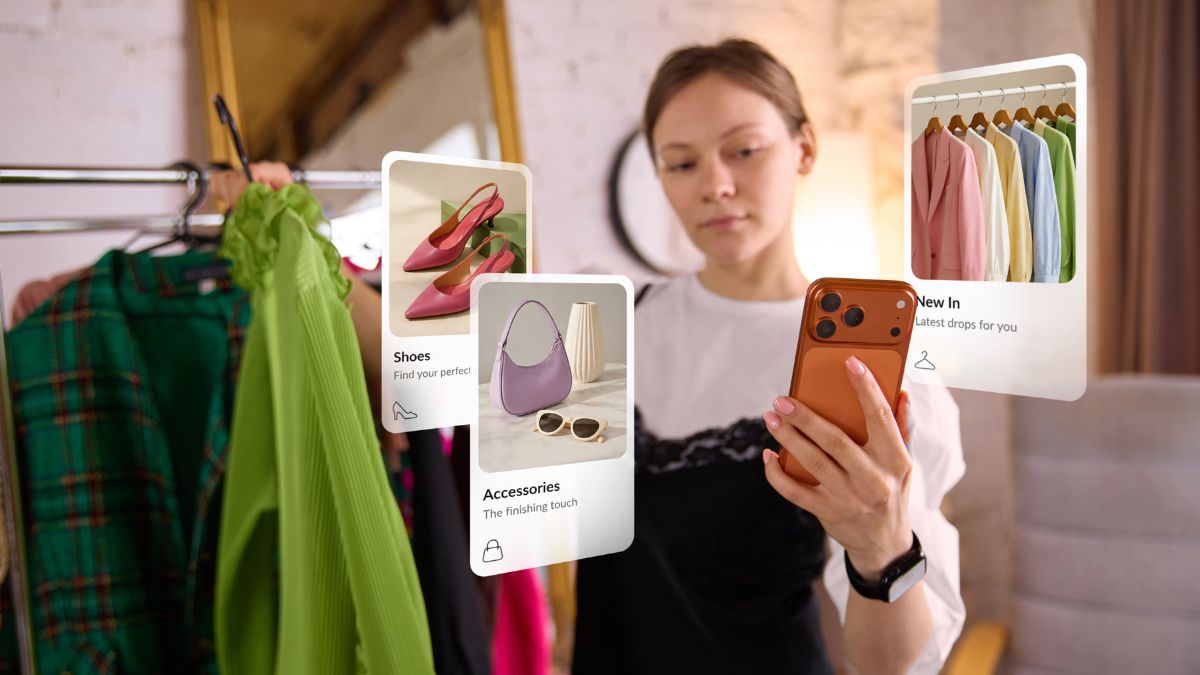
Imagine you’re a shopper looking for a coffee machine under £300. It needs to fit a small kitchen, make a decent flat white and arrive before the weekend. Instead of opening ten tabs and spending hours flicking through as you research, you’re probably going to ask an artificial intelligence (AI) assistant to compare the options.
The AI assistant may narrow the field, explain the trade-offs, check current prices and send the shopper towards a purchase. That changes the first challenge for an e-commerce brand. Before the customer can consider its Black Friday offer, the assistant needs to find and understand it.
During the 2025 US holiday season, visits to retail sites from generative AI tools rose by 693% compared with the previous year. Adobe expects those visits to grow by a further 130% during the 2026 holiday season. It forecasts a 95% increase on Black Friday itself. These figures measure shoppers clicking from AI tools to retail sites. They do not measure purchases completed by an AI agent, and Adobe notes that the starting base remains modest.
More shoppers are using AI to work out what to buy, which product suits their circumstances and whether a deal is worthwhile. Black Friday gives that behavior a deadline: prices and availability can change quickly, while shoppers want a confident answer now.

AI shopping is becoming more useful than a list of links. ChatGPT lets shoppers describe a budget and set of preferences, refine the results through conversation and compare products side by side. Merchants can supply product feeds and promotions to help it present accurate information. Google has introduced a commerce protocol designed to connect shopping discovery with purchasing, including checkout plans for eligible US retailers on its AI surfaces.
Checkout is still developing. In March 2026, OpenAI said its initial Instant Checkout experience had not offered the flexibility it wanted. It shifted its immediate focus towards product discovery and allowing merchants to use their own checkout experiences. Brands should therefore prepare for AI-assisted purchasing without assuming that every sale will move inside a chatbot this Black Friday.

Generative engine optimization (GEO) is the practice of making a brand and its products easier for AI systems to find, interpret and recommend. As AI-assisted shopping becomes more common, GEO is emerging as a natural extension of SEO.
For Black Friday AI search optimization, that starts with reliable product information.
An assistant answering “Which waterproof jacket is best for a wet commute under £150?” needs more than a product name and a percentage discount. It needs to understand fit, materials, sizes, delivery, returns, reviews and what distinguishes one jacket from another. If those details are absent, vague or inconsistent across a product page and feed, the assistant has less to work with.

Check titles, descriptions, images, variants, prices and stock status across the website and shopping feeds. OpenAI says current product feeds help ChatGPT present accurate pricing, availability and seller information.
Explain who each product is for, where it performs well and any meaningful limitations. Clear comparisons and specific answers are more useful than repeating “best Black Friday deal” across hundreds of pages.
A sale price on the page should agree with the price in the feed. Include the correct start and end dates for offers. Google provides a sale price effective date field for precisely this purpose.
Delivery cut-offs, shipping costs and return terms can decide a recommendation, particularly for gifts. Google’s merchant listing guidance supports structured information about price, availability, shipping and returns.
Test realistic shopping prompts before and during the promotion. Look for missing products, outdated prices, incorrect claims and competitors that answer the customer’s question more clearly. Track AI-referred visits and their outcomes, while recognizing that some AI-influenced shoppers may arrive through another channel.
David Taylor, SVP, DigitalBrands have spent the last two decades optimizing for search engines. Now, we need to optimize for answers. This Black Friday, visibility alone won’t be enough. If AI systems can’t evaluate and recommend your products, you’re competing for customers who may never even see you.
None of this replaces search engine optimization (SEO), paid media or a sound Black Friday offer. Google’s guidance for its AI search features still emphasizes accessible pages, useful content and structured data that matches what customers can see. GEO builds on that foundation and asks a further question: does the available information help an assistant make a useful recommendation?
Black Friday will remain a contest on value. Increasingly, it will also be a contest on clarity. A brand with a strong offer may still be overlooked if an AI assistant cannot establish what is in stock, why it suits the shopper and whether it will arrive on time. The brands investing in Black Friday AI search optimization today will be better placed to earn visibility, recommendations and consideration when customers turn to AI for help with their purchasing decisions.
At Dig & Dig, we help brands navigate emerging digital behaviors and prepare for how consumers discover, evaluate and purchase products online. From SEO and ecommerce strategy to generative engine optimization (GEO), our specialists help businesses improve visibility across both traditional search engines and AI-powered experiences.
Read more from our team of digital specialists:
As AI-assisted shopping continues to evolve, ensuring your content, product data and digital presence are optimized for both search engines and AI systems is becoming increasingly important.
Want to understand how your brand appears in AI search results? Get in touch with Dig & Dig at hello@diganddig.com to discuss your AI search optimization strategy ahead of Black Friday and beyond.
Expertly led, expertly done. Our approach goes deep, and so does our experience.
SVP, Digital
David is a commercially experienced Digital Marketing Leader with over 20 years of experience driving business growth through full-funnel, digital-first strategies in B2C, B2B, and B2D markets.